
In short:
Neither of these guys represent the type of stretching I’m talking about.
THIS TYPE OF STRETCHING HOWEVER, IS MORE LIKE IT WHEN IT COMES TO US MERE MORTALS. IN THIS BLOG I WANT TO EXPLAIN WHY STATIC STRETCHING COULD HELP YOU WITH LONG TERM INJURY PREVENTION.
In detail:
Everyone that reads this blog will be able to imagine a typical toddler and how active they are as they wreak havok upon their surroundings. Superhumans they truly are, unlike Mr. Fantastic and Mrs. Invincible depicted above, a toddler not only has the uncanny ability to supercharge themselves a stones throw away from falling asleep but they also have an innate flexibility that would put both superheroes to shame. So what relevance does this have to this newsletter I hear you ask? Well, it is this innate flexibility that we should all be striving to get back if we wish to live our lives injury free and happy.
Very recently I finished a book by the brilliant Michael Boyle, which galvanised my belief that static stretching is a valuable exercise that should be a valued aspect of any individuals day to day life as a long term preventative against injury. This man is a world class coach who has worked with elite teams and athletes in the USA. Not only does he coach at the highest levels but he is also an educator and lecturer who is able to look beyond his own expertise to understand concepts typically reserved for physical therapists. In his book amongst other really interesting points of discussion. He draws the reader’s attention to the importance of static stretching and how in the 80s this went from being the best way to warm-up to being that thing no-one should ever do again when readying themselves for an activity. Why did this happen? Well, Michael goes on to tell us of research carried out in the 1980’s demonstrated that static stretching before an activity reduced muscular power output. As a result, the world of coaching turned to dynamic stretching as the new way to prepare the muscles for activity during the warm-up.
So if static stretching lost favour then why is it I have decided to draw your attention to its importance? The truth is that dynamic stretching before exercise reduces the likelihood of acute injury, however it doesn’t have the same positive effect on tissues that have undergone long-term changes as a result of over-use problems such as runner’s knee, IT-band syndrome, lower back pain or a painful shoulder. In these cases, It appears that an individuals lack of flexibility is a causitive factor in gradual onset injuries and in light of this the new way of thinking would stregthen the idea that static stretching included in a warm-up will reduce the possbility of developing an over-use condition. His prescribed way of doing things would be as follows:
- Foam Roll – to mobilise the soft tissues and reduce the density of the muscles
- Static Stretch – to work on improving flexibility and the resting length of muscles
- Dynamic Warm-up – to reduce the negative impact of the stretching and rolling, while ensuring the musculature is warm and ready for the activity ahead
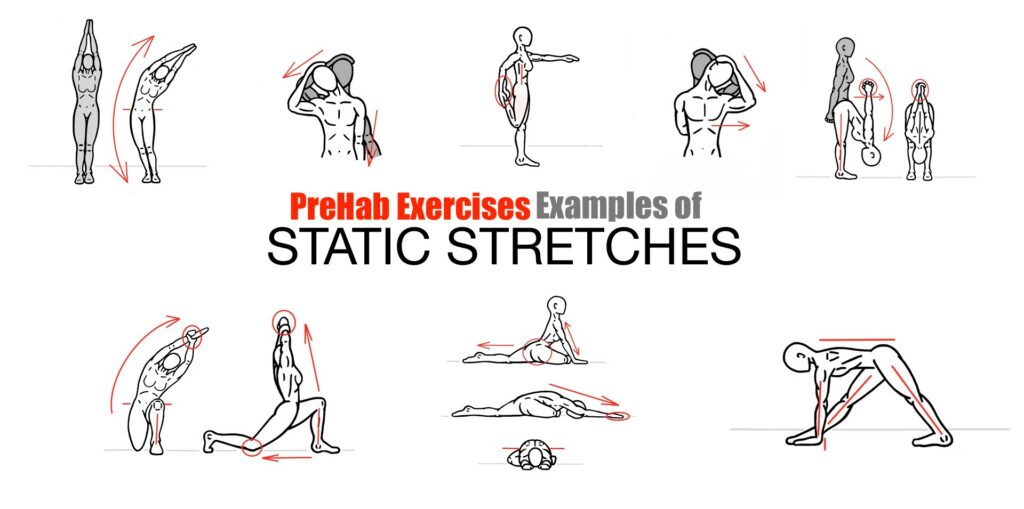
Taking into account all this learning, I decided to put together a video to help you secure the long term health and flexibilty in your legs by introducing you to simple stretches for the following:
- Lateral Hamstrings (2.40 min)
- Hip Flexors (3.52 min)
- Lateral Rotators and Abductors (4.55 min)
- Adducors (6.03 min)
You may find that by including these in a daily health routine that you rediscover that childhood flexibility you once had.
Static Stretches for Long Term Injury Prevention
In this video I demonstrate a number of static stretches for the legs that may be carried out to help with long term injury prevention. Please not that this is not a definitive guide and any stretches shown here should only be performed under the guidance of the relevant professional. If you wish to simply view the stretches you can find the stretches by skipping to their location in the video. Lateral Hamstrings (2.40 min) Hip Flexors (3.52 min) Lateral Rotators and Abductors (4.55 min) Adductors (6.03 min)
If you are suffering from any of the symptoms or complaints described above and would like assistance with your ailments, please book online.