
If you’ve ever experienced pain that starts in your lower back or buttock and travels down your leg, you’ve probably heard the term sciatica.
It’s one of the most commonly searched pain conditions, yet it’s also one of the most misunderstood.
Many people assume sciatica is a diagnosis in itself. In reality, sciatica is a description of symptoms caused by irritation or sensitivity involving the sciatic nerve. Understanding what may be contributing to those symptoms is often the most important step towards recovery.
At Advance SRM Therapies in Clanfield, we regularly meet people who have been struggling with sciatica for weeks, months or sometimes longer. Often they arrive worried that something serious is happening or believing that rest is the only answer.
The reality is usually more nuanced.
What Is the Sciatic Nerve?
The sciatic nerve is the largest nerve in the body.
It begins in the lower back, travels through the buttock and runs down the back of each leg before branching into smaller nerves lower down.
Because of this pathway, irritation affecting the nerve can create symptoms anywhere along its route.
This may include:
- Lower back pain
- Buttock pain
- Hip discomfort
- Pain travelling into the thigh
- Calf pain
- Tingling
- Pins and needles
- Numbness
- Changes in sensation
Some people experience sharp, shooting pain.
Others describe a deep ache, burning sensation or feeling of tightness throughout the leg.
What Causes Sciatica?
Sciatica is not always caused by the same thing.
Common contributors may include:
Disc-Related Irritation
The discs sit between the vertebrae of the spine and help absorb forces during movement.
Sometimes changes within a disc can contribute to irritation of nearby nerve roots, potentially producing sciatic symptoms.
Joint Stiffness or Irritation
The joints of the lower back can become sensitive or restricted, which may contribute to symptoms affecting the surrounding area.
Muscle and Soft Tissue Factors
Tension or sensitivity within muscles around the lower back, buttock and hip can sometimes contribute to symptoms that resemble sciatica.
The piriformis muscle is often discussed in this context, although true nerve compression by the piriformis appears to be relatively uncommon.
Persistent Pain Mechanisms
Not all ongoing sciatic symptoms are caused by ongoing tissue damage.
Sometimes the nervous system can remain sensitive even after the original irritation has improved.
This is one reason why some people continue to experience symptoms despite scans showing relatively minor findings.
What Does Sciatica Feel Like?
Symptoms vary considerably between individuals.
Common experiences include:
- Pain travelling below the knee
- Pain when sitting for prolonged periods
- Discomfort during driving
- Difficulty bending forwards
- Symptoms when standing from a seated position
- Tingling in the foot
- Burning sensations in the calf
- Pain when walking
- A feeling that the leg is “tight” or “heavy”
Some people have significant pain with minimal back symptoms.
Others experience both back pain and leg symptoms together.
This variation is one reason why a detailed assessment matters.
Is Rest the Best Option?
Many people assume that complete rest will solve sciatica.
In the early stages of severe symptoms, reducing aggravating activities may be sensible.
However, prolonged inactivity can sometimes make recovery more challenging.
Movement often plays an important role in recovery.
The key is identifying what type and amount of movement is appropriate for the individual.
Walking, gentle mobility exercises and gradually returning to normal activities may be beneficial for many people, although every situation is different.
How Can Clinical Soft Tissue Therapy Help?
At Advance SRM Therapies, we don’t simply focus on where the pain is felt.
We begin with a detailed assessment to understand:
- Your symptoms
- Movement patterns
- Lifestyle factors
- Previous injuries
- Work demands
- Activity levels
- Recovery barriers
This reflects our philosophy of Assess • Treat • Empower.
Treatment may include:
Hands-On Therapy
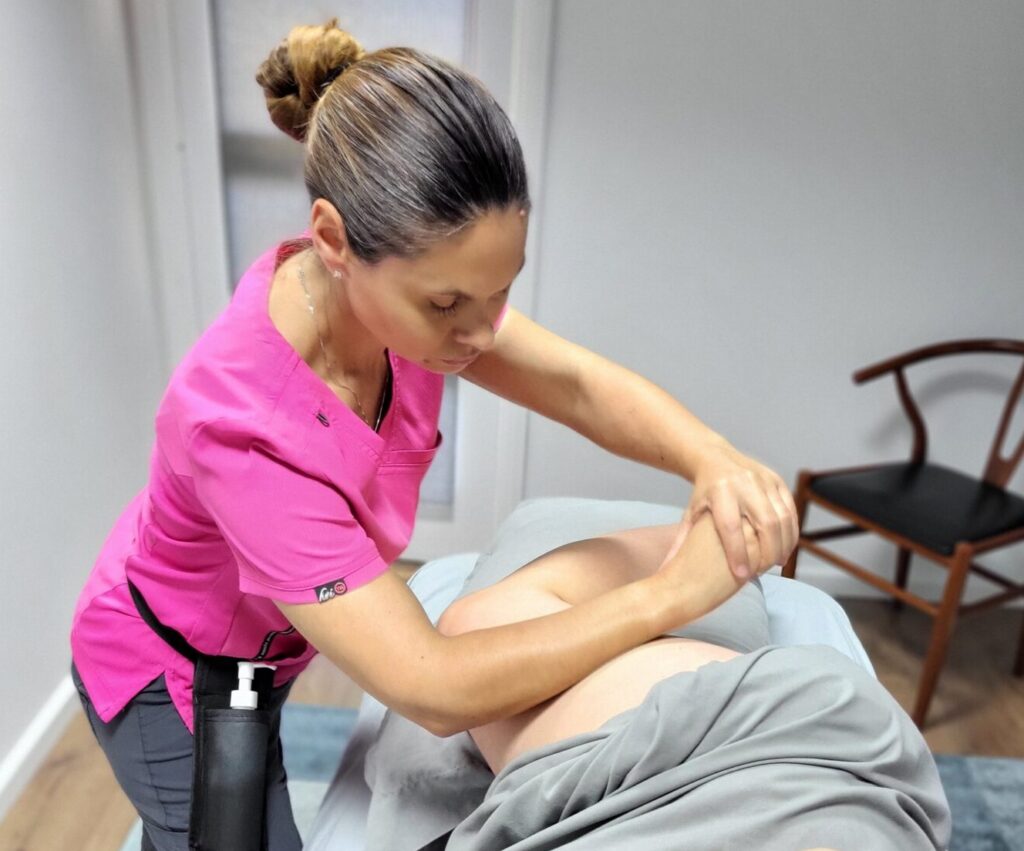
Clinical Soft Tissue Therapy may help address muscle tension, movement restrictions and areas of sensitivity that could be contributing to discomfort.
Movement Guidance
Many people benefit from understanding which movements may help settle symptoms and which activities may currently be aggravating them.
Rehabilitation Support
Simple, individualised exercises can often support confidence, mobility and recovery.
Education
One of the most valuable parts of treatment is helping people understand what may be happening and why.
Reducing uncertainty and fear around symptoms can often improve confidence in movement and activity.
When Should You Seek Help?
Sciatic symptoms are worth assessing if:
- Symptoms have persisted for several weeks
- Pain is affecting sleep
- Work is becoming difficult
- Walking distance is reducing
- Exercise has become limited
- Symptoms keep returning
- You’re unsure what is causing the problem
Many people seek treatment only after months of frustration.
Early assessment can often provide reassurance, education and a clearer plan of action.
When Should You Seek Urgent Medical Advice?
Although most cases of sciatica are not medical emergencies, certain symptoms require prompt medical assessment.
Seek urgent medical advice if you experience:
- Loss of bladder or bowel control
- Numbness around the saddle area (inner thighs, buttocks or genitals)
- Rapidly worsening weakness in the leg
- Significant unexplained weight loss
- Symptoms associated with infection, fever or feeling unwell
- Severe trauma
- Concerns related to a history of cancer
These symptoms may indicate more serious conditions and should not be ignored.
The Bottom Line
Sciatica can be painful, frustrating and sometimes worrying.
The good news is that many people improve with the right combination of assessment, education, movement guidance and appropriate treatment.
Because sciatica can have several contributing factors, understanding your situation is often more important than searching for a one-size-fits-all solution.
At Advance SRM Therapies, we believe people deserve clear explanations, personalised care and support that helps them move forwards with confidence.
That’s why our approach is simple:
Assess • Treat • Empower.
If you’re struggling with sciatic symptoms in Clanfield, Horndean, Waterlooville, Petersfield, Havant, Denmead or surrounding areas, a professional assessment may help you better understand what is happening and what your next steps could be.
FAQs
1. Can sports massage help sciatica?
Sports massage may help some people experiencing muscle tension or soft tissue discomfort associated with sciatic symptoms. However, because sciatica can have multiple contributing factors, assessment is important before deciding on treatment.
2. How long does sciatica last?
Recovery times vary significantly. Some episodes settle within weeks, while others may persist for longer. The duration often depends on the factors contributing to symptoms.
3. Is walking good for sciatica?
Walking is often well tolerated and may help some people stay active during recovery. However, individual responses vary.
4. Can sciatica cause foot tingling?
Yes. Tingling, pins and needles and altered sensation in the foot can occur when the sciatic nerve or its nerve roots become irritated.
5. When should I worry about sciatica?
Urgent medical assessment is recommended if symptoms include bladder or bowel changes, saddle numbness, progressive weakness, infection signs or unexplained symptoms.