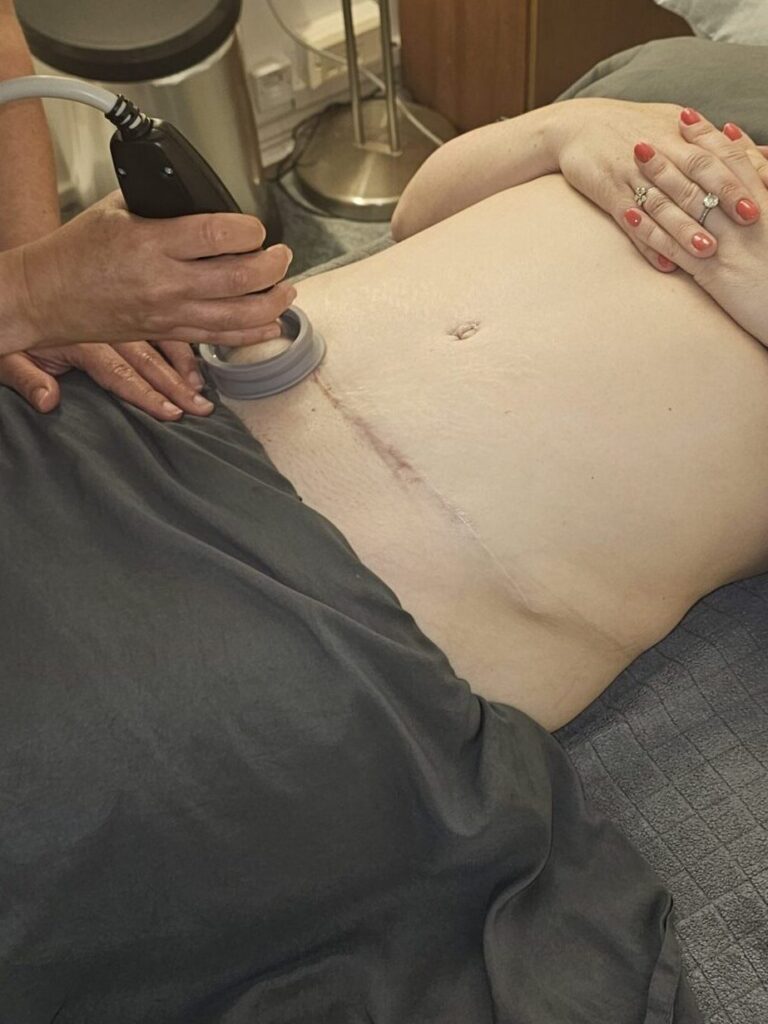
If you’ve ever had surgery, an injury or a Caesarean section, you’ve probably been told that once the wound has healed, that’s the end of the process.
For many people, that is exactly what happens.
The scar settles, life moves on and it’s rarely thought about again.
But that isn’t everyone’s experience.
Some people continue to notice tightness, pulling sensations, sensitivity or discomfort months or even years later. Others find that movement never quite feels the same, even though everything appears to have healed well on the surface.
One of the most common things we hear in clinic is:
“I didn’t think an old scar could still be affecting me.”
Sometimes it isn’t.
Sometimes it may be.
Knowing the difference starts with understanding how scars heal and how they can influence the tissues around them.
What Is A Scar?
A scar is your body’s natural way of repairing damaged tissue.
Whether the injury comes from surgery, an accident, burns or another form of trauma, your body produces new collagen fibres to restore strength and close the wound.
This process is remarkable.
Without it, healing simply wouldn’t happen.
However, healing doesn’t always mean the tissues return to exactly the way they were before.
Scar tissue has a different structure from the original tissue. It can behave differently under movement and load, particularly if it lies across muscles, tendons, fascia or joints.
That doesn’t mean scars are “bad.”
It simply means every scar is unique.
Healing Is More Than Skin Deep
When most people look at a scar, they judge it by appearance.
Is it flat?
Has the colour faded?
Is the skin closed?
These are all positive signs.
But underneath the skin, healing continues for many months.
The deeper layers of tissue also adapt, remodel and mature over time.
One thing we often notice in clinic is that people assume because their scar looks neat, everything underneath must be moving freely as well.
Sometimes that’s true.
Sometimes those deeper tissues remain sensitive or less mobile, even years later.
Why Can Some Scars Feel Tight?
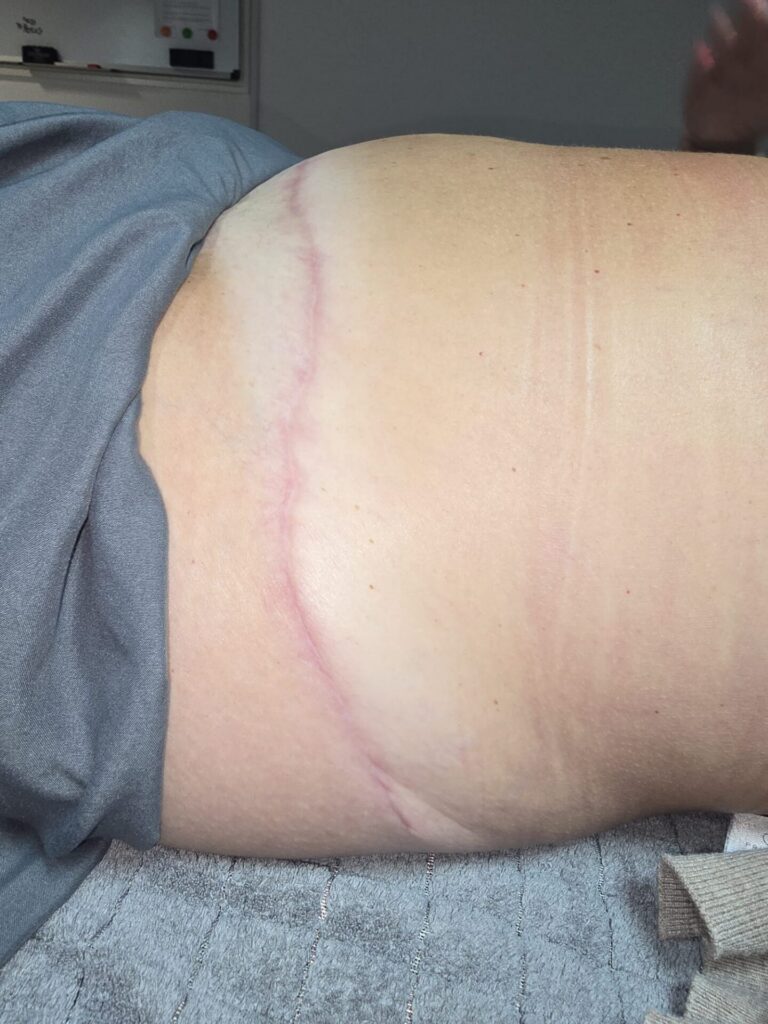
During healing, collagen fibres are laid down to repair damaged tissue.
As these fibres mature, they gradually reorganise.
Occasionally, areas may become less mobile than the surrounding tissues.
People sometimes describe sensations such as:
- Tightness
- Pulling
- Stiffness
- Sensitivity
- Tenderness
- A feeling that the skin doesn’t glide comfortably
These experiences don’t necessarily indicate that anything is wrong.
They simply suggest the scar may be worth assessing if symptoms are affecting comfort or movement.
Scar Tissue Restriction & Sensitivity | Advance SRM Therapies Ltd
Scars Can Affect More Than The Area You See
One of the most surprising things for many people is that discomfort isn’t always felt directly on the scar itself.
Instead, people may notice:
- Reduced movement
- Tightness when stretching
- Discomfort during exercise
- Sensitivity to clothing
- Difficulty lying comfortably
- A pulling sensation during everyday activities
Many clients tell us they assumed these changes were simply something they had to live with.
Often, they’ve never realised Scar Therapy was even an option.
Common Scars We See At Advance SRM
Because every person is different, every scar deserves an individual assessment.
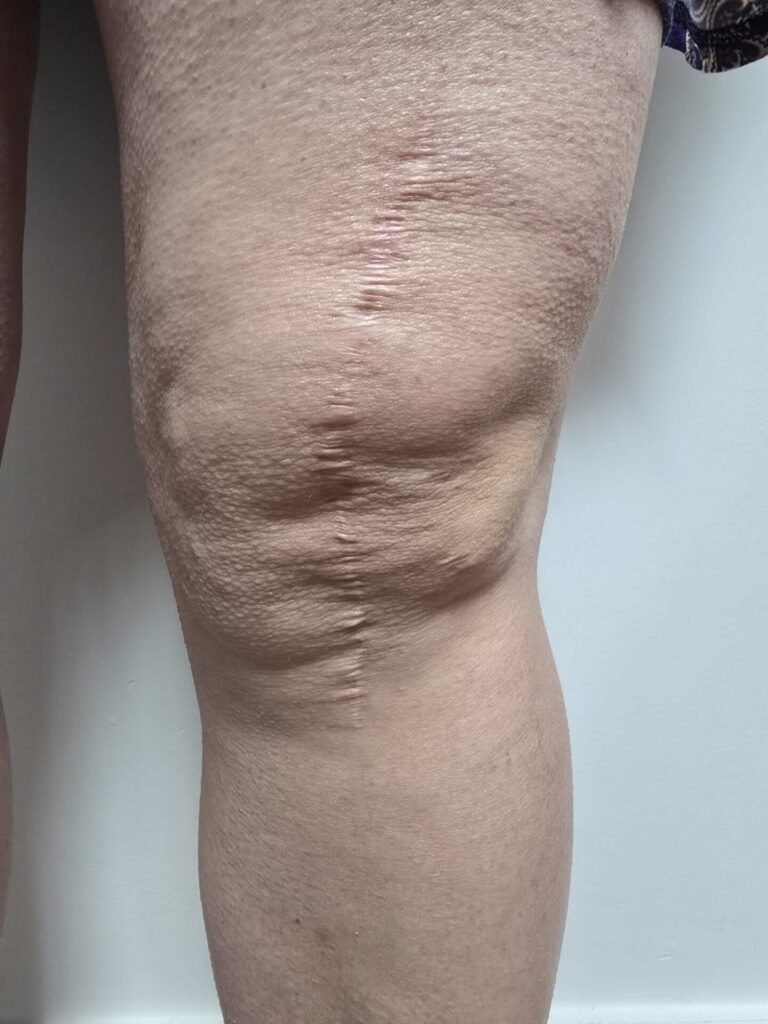
At Advance SRM Therapies we regularly support people following:
- Caesarean section
- Knee replacement surgery
- Hip replacement surgery
- Shoulder surgery
- Abdominal surgery
- Cancer-related surgery
- Orthopaedic procedures
- Sports injuries
- Accidents and traumatic injuries
Each person’s goals are different.
Some want greater comfort.
Others hope to improve confidence in movement.
For others, it’s simply understanding whether their scar could be contributing to ongoing symptoms.
Post-Surgical Pain & Stiffness | Advance SRM Therapies Ltd
What Does Scar Therapy Involve?
Scar Therapy isn’t about forcing or aggressively breaking down tissue.
In fact, treatment should always respect the stage of healing and the individual sitting in front of us.
Following a detailed assessment, treatment may include:
- Gentle hands-on techniques
- Soft tissue therapy
- Movement advice
- Self-management strategies
- Education about healing
- Techniques using LymphaTouch where appropriate
The aim is to support tissue mobility, improve comfort and help you feel more confident in using the affected area.
Treatment is always adapted to the individual.
No two scars are exactly alike.
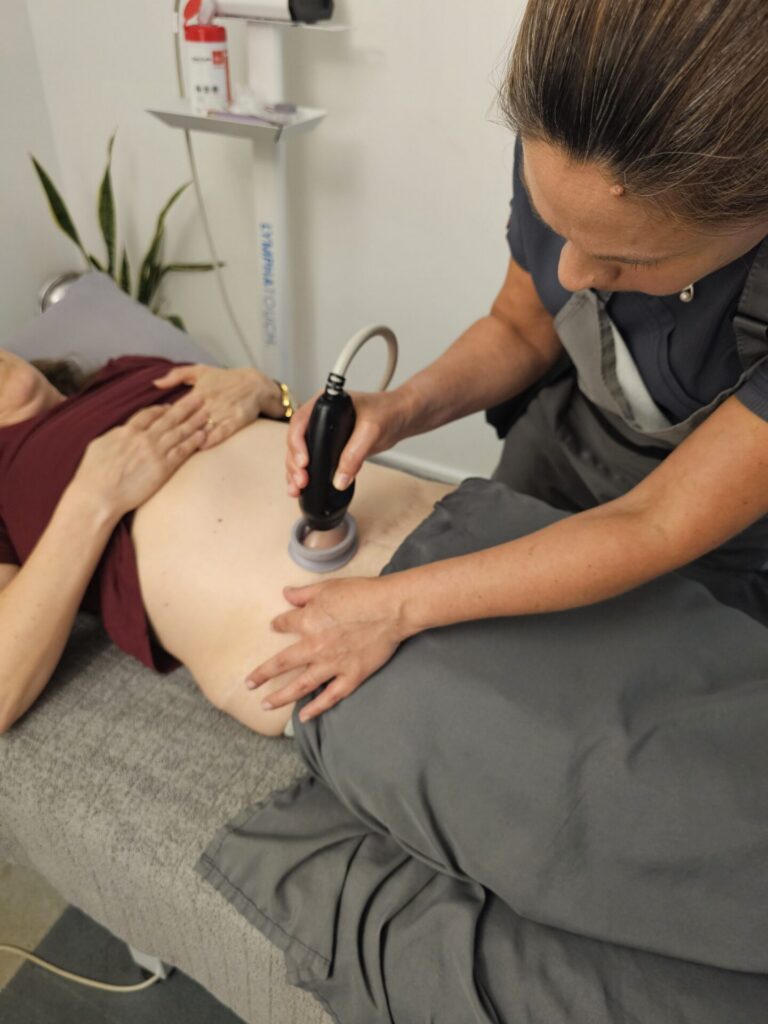
Scar Tissue Therapy | Advance SRM Therapies Ltd
One Thing We Frequently See In Clinic
One thing we frequently see is people arriving convinced that because surgery was several years ago, nothing can be done.
Often they’ve simply never had anyone assess the scar itself.
Sometimes the scar isn’t the main issue at all.
Sometimes it forms part of a much bigger picture.
That’s why assessment matters.
Rather than making assumptions, we take time to understand your story, your goals and how your symptoms affect your everyday life.
That reflects one of our core beliefs:
We treat people, not body parts.
Can Older Scars Still Be Assessed?
Yes.
Although every situation is different, scars can be assessed many years after surgery or injury.
Many people are surprised to learn that they don’t have to wait until symptoms become severe before seeking advice.
Equally, not every scar requires treatment.
If a scar is comfortable, moves well and isn’t affecting your daily life, no treatment may be needed.
Assessment helps determine whether Scar Therapy is likely to be appropriate for your individual situation.
When Should You Seek Advice?
It may be worth arranging an assessment if your scar is associated with:
- Ongoing tightness
- Persistent sensitivity
- Reduced movement
- Pulling during activity
- Difficulty returning to hobbies or exercise
- Questions about recovery after surgery
If your scar becomes increasingly red, swollen, hot, starts leaking fluid, or you feel generally unwell, seek prompt medical advice, as these symptoms may indicate infection or another complication requiring urgent assessment.
Why We Take A Different Approach
At Advance SRM Therapies, Scar Therapy begins with listening.
Before any treatment, we want to understand:
- What brought you here?
- What would you like to get back to doing?
- What concerns do you have?
- How has your scar affected your confidence or movement?
Only then do we consider the most appropriate treatment options.
Our philosophy has always been simple:
Assess • Treat • Empower
We believe understanding your body is an important part of recovery.
Many clients leave with something just as valuable as treatment itself: greater confidence in what they’re experiencing and practical advice they can use every day.
Supporting Your Recovery
No two scars are the same.
No two recoveries are the same either.
Whether your scar developed after surgery, childbirth or injury, understanding what’s happening beneath the surface can help you make informed decisions about your recovery.
If you’ve been wondering whether an old scar could still be contributing to discomfort, tightness or restricted movement, it may simply be worth having a conversation.
An assessment doesn’t commit you to treatment.
It gives you the opportunity to better understand your scar, ask questions and explore whether Scar Therapy may be appropriate for you.
If you’re looking for Scar Therapy in Clanfield, Horndean, Waterlooville, Petersfield, Havant or the surrounding Hampshire area, we’re here to provide thoughtful, personalised, evidence-informed care.